 España
The potato omelette: much more than a dish, a symbol of Spanish culture.
An origin surrounded by stories and legends

Its birth dates back several centuries, although its exact history is shrouded in controversy and myth. One of the most widespread theories attributes its creation to General Tomás de Zumalacárregui, who, according to legend, popularised it during the Carlist wars of the 19th century as a simple and nutritious solution to feed his troops.
Another version states that it was an anonymous peasant woman from Extremadura who improvised the recipe using the basic ingredients she had on hand to satisfy the appetite of the general and his army.
Beyond the anecdotes, what is certain is that it arose in a context of necessity, becoming over time a dish universally recognised and loved by millions of people.
It is so well loved and recognised in Spanish society that it even has its own day, March 9th is the world day of the tortilla de patatas! To know the reason for this celebration we must go back to the 15th century, in the pilgrimage to the convent of Cubas de la Sagra, held on March 9 in commemoration of the death of Santa Juana, lunchtime coincided with the arrival in Fuenlabrada and at that time everyone took out their food before continuing their journey and almost as a rule everyone brought bread and potato omelette, so over the years this tradition was implemented and the day March 9 became the day of the Spanish omelette.
Regional varieties: one dish, multiple interpretations
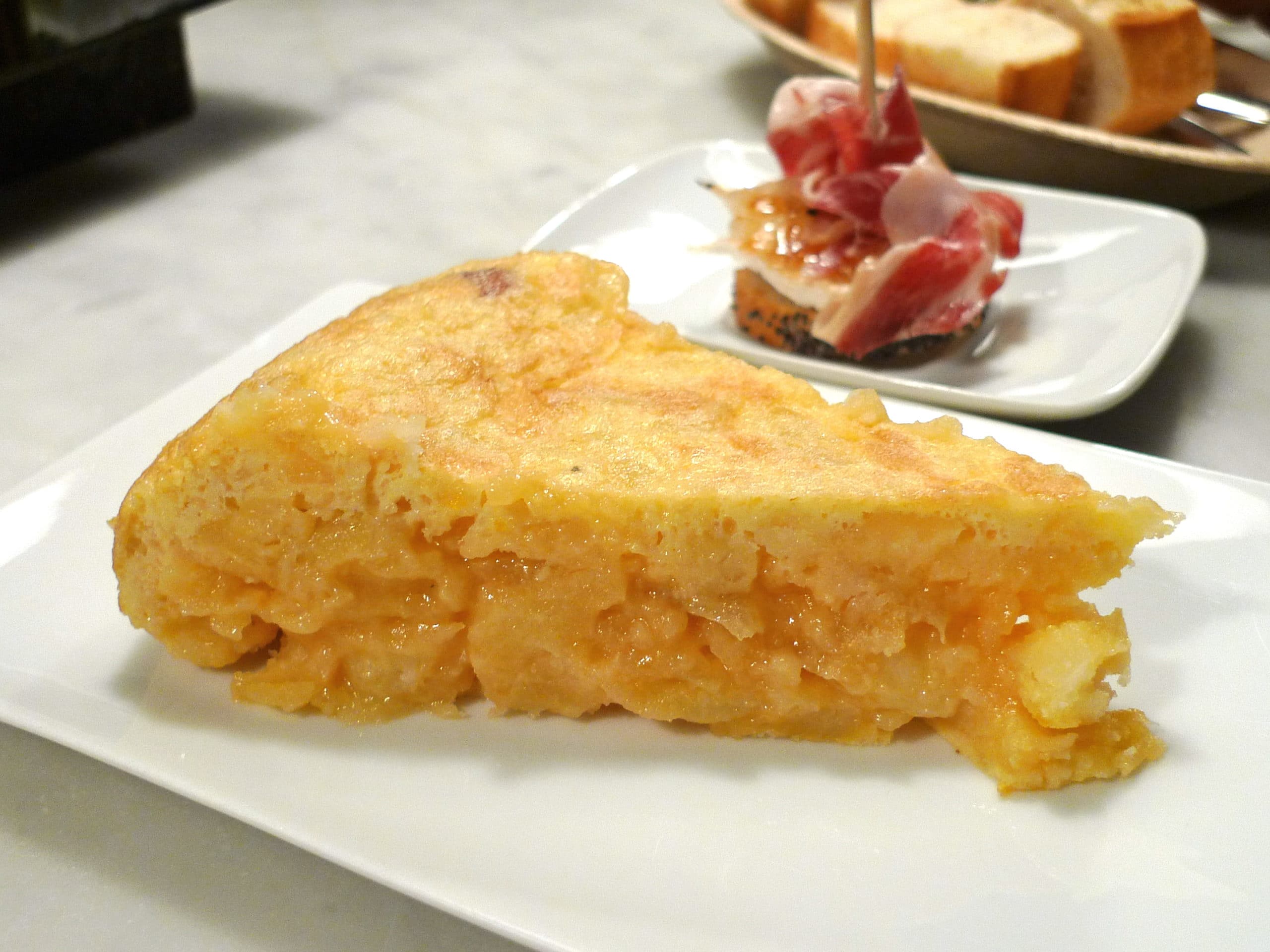
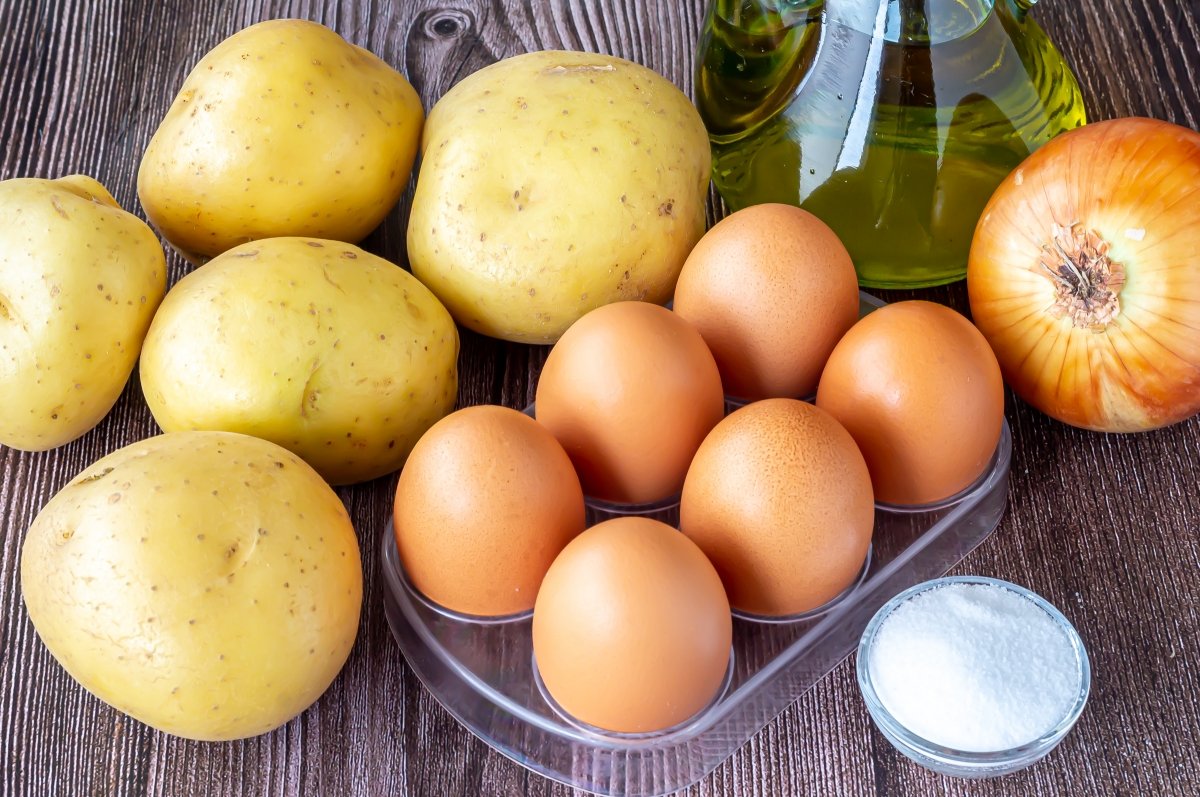
Although the classic recipe is based on a combination of potatoes, eggs, olive oil and salt, each region of Spain has added its own particular touch. In Galicia, for example, it is not unusual to find tortillas that include chorizo or turnip tops. Elsewhere, as in the Basque Country, the famous pinchos usually feature small portions of tortilla accompanied by other ingredients.
Perhaps the biggest divide around this dish is the eternal dilemma of "onion or no onion"? This often contentious debate reflects how even the simplest aspects of a recipe can carry significant cultural weight. For some, the onion adds sweetness and depth of flavour, while others prefer to defend this traditional Spanish dish in its purest form without the added elements of eggs and potatoes.
Although the potato omelette is made in all parts of Spain, there is one place where it perhaps stands out more than others. The omelette from Betanzos, a town in Galicia, is famous for its juicy texture and its simplicity. It is made only with eggs, potatoes and salt, without onion. Its main characteristic is that the egg remains slightly liquid, creating a creamy mixture that contrasts with the tender fried potatoes. In recent years it has become a symbol of Galician gastronomy, as it has as many followers as opponents.
Iegardless of which variant is preferred, the tortilla de patatas is a perfect representation of how regional diversity in Spain also manifests itself in the cuisine.
Protagonist in people's social and cultural life
Beyond its taste and simplicity, the tortilla de patatas plays a prominent role in Spanish social life. It is the centre of attention at family gatherings, company meals, birthdays and, of course, as a tapa in Spanish bars. Tapas and pinchos with tortilla are almost a must in any eating establishment..
It is also associated with celebrations and festivities. In many localities, it is common for families and friends to get together to prepare a large omelette as a symbol of union and conviviality. At these celebrations, there are even potato omelette competitions! where friends try their best to demonstrate their art in the preparation of this simple but delicious dish. Moreover, in the school environment, it is a frequent element in school lunches or excursions.
Symbolism and culinary heritage
This dish embodies fundamental values of this country's culture: simplicity, creativity and adaptability. In a place where local ingredients and culinary tradition are so highly valued, it represents how something so simple can be elevated to the highest level of gastronomic art.
Moreover, no complex techniques or sophisticated utensils are required for its preparation, which makes it a perfect example of the "kitchen of use". It is a recipe that unites generations and is passed down, consolidating itself as part of Spain's culinary heritage.
The tortilla on the international scene
Although it is a profoundly Spanish dish, it has managed to cross borders and has made a place for itself in international gastronomy. In Latin American countries, such as Argentina and Uruguay, it is known as tortilla de papas and is adapted to local ingredients and customs.
World-renowned chefs have also paid tribute to it, reinterpreting it in creative ways that bring it closer to haute cuisine, but always maintaining its humble and authentic essence.
The art of making a good Spanish omelette
Preparing a good potato omelette requires more skill than science. The balance between the ingredients, the desired texture (more or less curdled) and the handling of the fire are key to achieving a perfect result.
Olive oil must be of high quality, the potatoes should be thinly sliced and simmered until tender, and the eggs should be beaten precisely to achieve the right texture.
The moment of turning it over is, without a doubt, the most feared step and the one that has starred in the most humorous videos ... a skill that every lover of Spanish cuisine seeks to master. Although to help, we can use anomelette pan, which makes this part much easier.
This dish is much more than a recipe; it is a symbol of cultural identity and a gastronomic heritage that transcends generations, with the ability to bring people together, evoke memories and represent the richness and diversity of Spanish cuisine.
Whether with or without onions, in a bar or at home, it will remain a fundamental pillar of this country's culture, uniting tradition and flavour in every bite. And while the onion debate continues, the one thing that is certain is that it will always be a source of pride and celebration.